Updated July 2026
Best Noise Cancelling Headphones: Top 3 Picks by Budget
There are dozens of noise cancelling headphones on the market, but most people only need to choose between three. After comparing current models on cancellation strength, battery life, sound quality, comfort, and price, these are the three worth buying in 2026: one around $100, one around $200, and one at the premium end. Each is the standout at its price, so the only real question is how much you want to spend.
The Three Picks at a Glance
| Pick | Model | Price* | Battery (ANC on) | Best For |
|---|---|---|---|---|
| Best overall | Sony WH-1000XM6 | $449 | 30 hours | Frequent flyers, best-in-class ANC |
| Best value | Bose QuietComfort (2023) | $249, often ~$179 | 24 hours | All-day comfort, big-brand ANC for less |
| Best budget | Anker Soundcore Space One | ~$99, often under $80 | 40 hours | First ANC pair, students, tight budgets |
*Approximate prices at the time of writing. Check the Amazon listing for the current price.
How These Three Were Chosen
The shortlist started with every current noise cancelling headphone from a brand with a track record, roughly two dozen models. Each was compared on the numbers that matter: measured cancellation performance from testing outlets like RTINGS and SoundGuys, battery life with ANC running, codec support, weight and comfort reports, call quality, and verified buyer ratings on Amazon. Anything discontinued, about to be replaced, or rated poorly by actual owners was cut. What survived was one clear winner at each of three budgets. If two models tied on performance, the cheaper one won.
Sony WH-1000XM6
Around $449 · 30-hour battery · 254 g
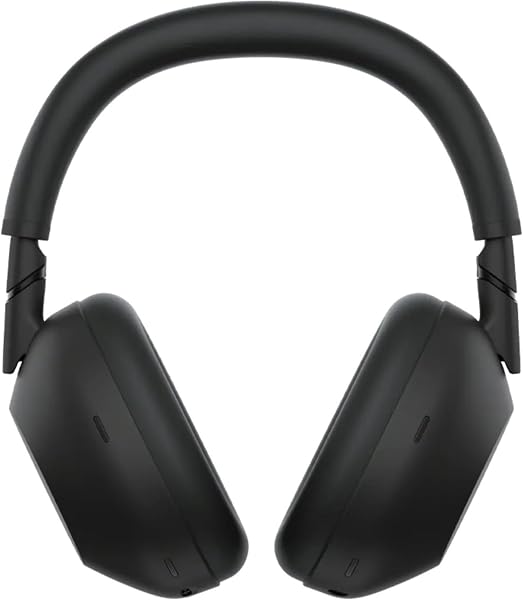
Sony's flagship is the benchmark everyone else gets measured against, and the XM6 widened the gap. Its QN3 processor and twelve-microphone array cancel low rumble, office chatter, and cabin drone better than anything else you can buy right now. Reviewers at RTINGS, What Hi-Fi, and SoundGuys all place it at or near the top of their 2026 rankings, and it holds a strong buyer rating on Amazon across thousands of reviews.
Beyond the cancellation itself, the details are what justify the price. Sound quality is rich and adjustable through a genuinely useful app EQ. Calls are clear even on a windy street. The folding design returned this generation, the case is slimmer, and a three-minute charge buys three hours of playback when you forgot to plug in before a flight.
- Best noise cancellation available in 2026
- Excellent, tunable sound with LDAC hi-res support
- Twelve mics make it the best of the three for calls
- Comfortable for long-haul flights; folds for travel
- Expensive
- 30-hour battery is the shortest of the three picks
- No water resistance rating
Watch: Sony WH-1000XM6 Review: Back on the Throne
One of tech's most trusted reviewers on why the XM6 reclaims the top spot, covering the returned folding design, the QN3 processor, and how it stacks up against Bose. Video by Marques Brownlee on YouTube.
Check price on Amazon →Bose QuietComfort Headphones (2023)
$249 list, currently around $179 on Amazon · 24-hour battery · 240 g
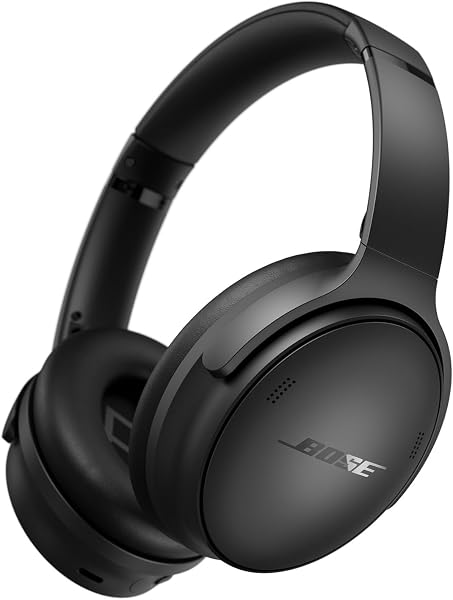
This is the pick for most people, and the reason is simple: it is the classic Bose QuietComfort formula, the headphone that defined noise cancellation for two decades, now selling for around half of what the flagship tier costs. Cancellation is genuinely strong, and it is especially good at the mid and high frequencies where cheaper models leak voices through. Comfort is where Bose has never been beaten: at 240 grams with soft, deep earcups, this is the pair people forget they are wearing.
The feature list holds up at the price: aptX Adaptive for hi-res Android audio, multipoint pairing for phone and laptop at once, physical buttons instead of finicky touch panels, a folding design with a compact case, and a wired jack for planes. The honest trade-offs against the Sony are a 24-hour battery, fewer microphones for calls, and a design carried over from the QC45 era, familiar rather than fresh.
- Legendary Bose comfort, lightest of the three
- Strong ANC, especially on voices and office noise
- aptX Adaptive and multipoint included
- Physical buttons and a folding travel case
- 24-hour battery is the shortest here
- Call quality is fine, not Sony-level
- Design unchanged from earlier QC generations
Watch: My Favorite Headphones Ever, Bose QuietComfort (2023)
A long-term owner's take on why the classic QuietComfort formula still wins at this price. Video by Fstoppers on YouTube.
Check price on Amazon →Anker Soundcore Space One
Around $99 list, regularly on sale under $80 · 40-hour battery · 263 g
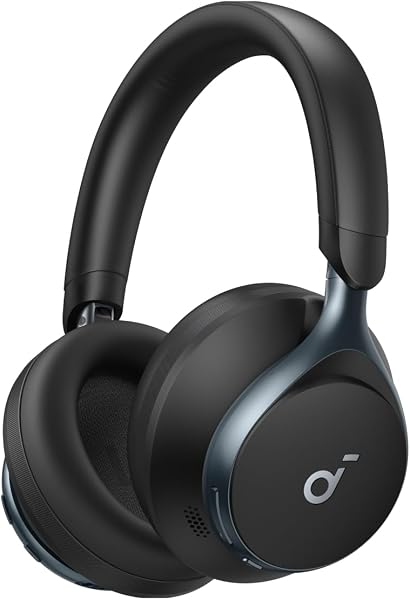
If you have never owned noise cancelling headphones, this is the cheapest way to find out what the fuss is about without buying junk. Anker's Space One was Wirecutter's budget pick, and the spec sheet reads like a mid-range model: adaptive ANC that Anker rates at up to 98% reduction of low-frequency noise, forty hours of battery with cancellation on, LDAC hi-res audio, multipoint pairing, and app-based EQ with dozens of presets.
The compromises are exactly where you would expect. The build is plasticky, the microphones are passable rather than good, and the cancellation, while genuinely effective on engine and fan noise, does not touch the Sony or Bose on voices. None of that changes the math: at this price, nothing else comes close on features.
- Unbeatable feature set under $100
- 40-hour battery with ANC on
- LDAC and multipoint, rare at this price
- Frequent sales below $80
- Plastic build feels its price
- Mediocre microphones for calls
- ANC weakest of the three on voices
Watch: Soundcore Space One: Good Noise Canceling for Under $100?
A measured look at how much real cancellation you get at this price, with mic samples and battery testing. Video by SoundGuys on YouTube.
Check price on Amazon →Full Spec Comparison
| Spec | Soundcore Space One | Bose QuietComfort | Sony WH-1000XM6 |
|---|---|---|---|
| Price* | ~$99 | ~$179 | $449 |
| Battery, ANC on | 40 h | 24 h | 30 h |
| Quick charge | 5 min → 4 h | 15 min → 2.5 h | 3 min → 3 h |
| Hi-res codec | LDAC | aptX Adaptive | LDAC |
| Multipoint | Yes | Yes | Yes |
| Weight | 263 g | 240 g | 254 g |
| Folding design | Yes | Yes | Yes |
| Microphones | 3 | 6 | 12 |
How to Choose
- Fly more than a few times a year? The Sony WH-1000XM6 pays for itself in quiet. Its cancellation of cabin drone is the single biggest gap between these three.
- Want the smart-money option? The Bose QuietComfort. Proven cancellation, unbeatable comfort, and at current pricing the savings buy your plane tickets.
- Not sure ANC is for you? Start with the Space One. If you love it, you can upgrade later and keep it as a backup or travel pair.
- Take lots of calls? Sony first, Bose second. Skip the Anker for daily meetings.
Worth Mentioning: What Did Not Make the Cut
A three-pick list means leaving good products out. If you are cross-shopping, here is the quick word on the models people ask about most.
- Bose QuietComfort Ultra (2nd Gen), ~$449. The closest rival to the Sony at the top. Cancellation is nearly identical and some prefer Bose comfort, but the Sony wins on battery, call quality, and app features at the same price. If you find the Bose meaningfully cheaper on sale, it is a fine swap.
- Apple AirPods Max, ~$549. Beautiful hardware and seamless for iPhone users, but heavier than everything here, more expensive, and the cancellation no longer leads the class. Buy it for the Apple ecosystem, not for ANC value.
- EarFun Wave Pro, ~$80. The budget runner-up, with tested battery life north of 50 hours. Sound and app polish trail the Soundcore, but if the Space One is out of stock this is the substitute.
- Soundcore Space One Pro, ~$170. Anker's step-up model sits awkwardly between tiers: better ANC than the Space One, but at that money the Bose QuietComfort is usually within reach and beats it on comfort and cancellation.
How Noise Cancellation Actually Works
Active noise cancellation is microphones plus math. Tiny mics on the earcups sample incoming sound hundreds of times per second, a processor generates the opposite waveform, and the two cancel each other before the noise reaches your ear. The physics work best on constant, low-frequency sound, which is why engines, fans, and road rumble almost vanish while a person talking next to you only gets quieter.
Three designs exist. Feedforward systems put the mics outside the cup, feedback systems put them inside, and hybrid systems use both. All three picks on this page use hybrid designs, which is now the standard for anything worth buying. Where the tiers separate is processing power and mic count: the Sony's twelve microphones and dedicated QN3 chip adapt to changing noise faster and cancel a wider frequency band than the six mics in the Bose or the three in the Anker. That gap is exactly what you pay for.
Passive isolation still matters too. A well-sealed earcup blocks high frequencies that electronics cannot touch, which is why fit is worth checking during the return window: a bad seal can cost more performance than a cheaper chip.
Over-Ear vs Earbuds for Noise Cancellation
All three picks here are over-ear headphones, and that is deliberate. For pure cancellation, over-ears win: bigger earcups seal better, fit larger batteries, and leave room for more microphones. Earbuds like the AirPods Pro or Bose QuietComfort Ultra Earbuds are the right call when portability rules, but they trade away battery life (about 6 to 8 hours against 30 to 50) and low-end cancellation strength. If your goal is silencing a flight, an office, or a dorm, over-ear is the format to buy.
Getting the Most Out of Whichever Pair You Buy
A few minutes of setup separates a decent experience from a great one, and most people skip all of it.
- Check the seal first. ANC performance depends on the earcups sealing against your head. Glasses arms, thick hats, and hair in the cup all leak noise. If cancellation seems weak on day one, adjust fit before blaming the headphones.
- Install the app and update the firmware. All three picks ship with companion apps (Sony Sound Connect, Bose Music, Soundcore). Firmware updates regularly improve cancellation and fix bugs, and the default EQ is rarely the best one.
- Set up multipoint deliberately. Pair your two most-used devices, usually laptop and phone. All three picks switch automatically when a call comes in.
- Use the ambient mode. Every pick here has a transparency setting that pipes outside sound in. Learn its shortcut before your first airport announcement instead of during it.
When to Buy: The Price Calendar
Noise cancelling headphones follow a predictable discount rhythm, and patience pays differently at each tier. The Anker discounts constantly: the Space One drops below $80 during Amazon's Prime events in July and October, around Black Friday, and at random points in between, so never pay full list. The Bose swings the hardest: it lists at $249 but spends much of the year around $179, so treat anything close to list price as a signal to wait a week. The Sony is the stubborn one: as the current flagship it rarely drops more than $50 in its first year, with the deepest cuts historically arriving around Black Friday. If you need headphones for a specific trip, buy when you need them; the difference rarely justifies waiting months.
Frequently Asked Questions
Are noise cancelling headphones worth it?
For anyone who flies, commutes, or works around constant background noise, yes. ANC removes the low steady rumble of engines, traffic, and HVAC, which lets you listen at lower volume with less fatigue. Even the budget pick on this page cancels enough noise to make a real difference.
Which of these is best for flights?
The Sony WH-1000XM6, without much debate. If the price is too steep, the Bose QuietComfort is the classic travel alternative: strong cancellation, a folding case, and comfort that holds up across an entire long-haul flight.
Do they work without playing music?
Yes. Plenty of people wear ANC headphones with nothing playing just to focus. Constant low noise nearly disappears; voices and sudden sounds are reduced but still audible.
Is the jump from $200 to $449 worth it?
Only if noise cancellation is the main reason you are buying. The Sony is clearly better at silencing the world, and clearly better on calls. For comfort and everyday cancellation, the Bose gets you most of the way there.
Can noise cancelling headphones damage your hearing?
No. If anything they help, because removing background noise lets you listen at lower volume. The pressure sensation some people notice in the first days is the brain adjusting to missing low-frequency sound, and it fades with use.
Will they block out talking or snoring completely?
Not completely. Voices sit in the frequency range ANC handles worst. Expect conversation and snoring to drop to a murmur, especially with music or white noise playing, but not to disappear. The Sony gets closest.
How long do the batteries last before wearing out?
Lithium batteries in headphones typically hold useful capacity for 3 to 5 years of regular charging. Higher starting capacity buys margin: the 40-hour Anker will still comfortably outlast a workday even after years of wear.
The Bottom Line
Buy the Sony WH-1000XM6 if you want the best noise cancelling headphones money can buy. Buy the Bose QuietComfort if you want the classic noise cancelling experience for half the price. Buy the Anker Soundcore Space One if you want to spend as little as possible and still get real noise cancellation. There is no wrong answer here, just three different budgets.